Indigenous Chicago
Chicago is, and always has been, a Native place.
Home to the Potawatomi, Odawa, Ojibwe, Peoria, Kaskaskia, Myaamia, Wea, Sauk, Meskwaki, Ho-Chunk, and other Indigenous peoples, the place we now call Chicago has long been an important crossroads for Indigenous people and remains home to a large and diverse urban Native community. Yet the city’s Indigenous history, and the vibrant Native communities present today, are often overlooked.
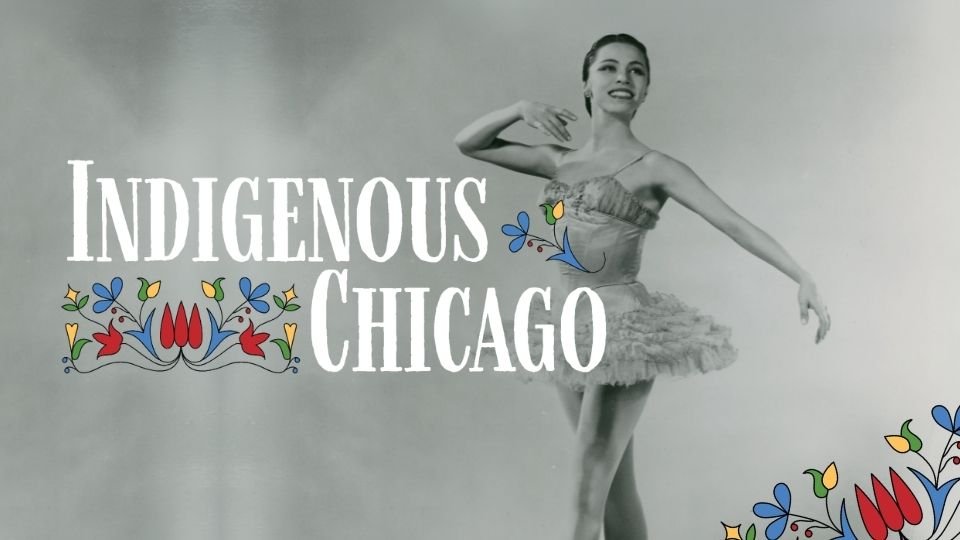
Featuring artwork by
- Jason Wesaw – Pokagon Band of Potawatomi
- Jim Terry – Ho-Chunk
- Camille Billie – Oneida/Diné
- Casey Brown (Ho-Chunk) & Julia Pello
Indigenous Chicago examines the dynamic history of Native life in Chicago from the seventeenth century to today. The exhibition centers Indigenous voices and explores removal, displacement, community building, activism, cultural continuity, and the ongoing presence of Native people in the city.
Originally developed and presented at the Newberry Library in collaboration with advisors from Chicago’s Native community and representatives of Tribal Nations with historic ties to the city, Indigenous Chicago is now on view at the Gichigamiin Indigenous Nations Museum, where it has been adapted for the Museum’s galleries.
The exhibition draws primarily from the Newberry’s collections, bringing together historical documents, maps, photographs, and contemporary Native artwork. It features commissioned works by Jason Wesaw (Pokagon Band of Potawatomi), Camille “Katahtu’ntha” Billie (Oneida and Diné), and Jim Terry (Ho-Chunk). Together, these materials highlight more than five centuries of Indigenous history and emphasize the enduring connections Native people have with Chicago.
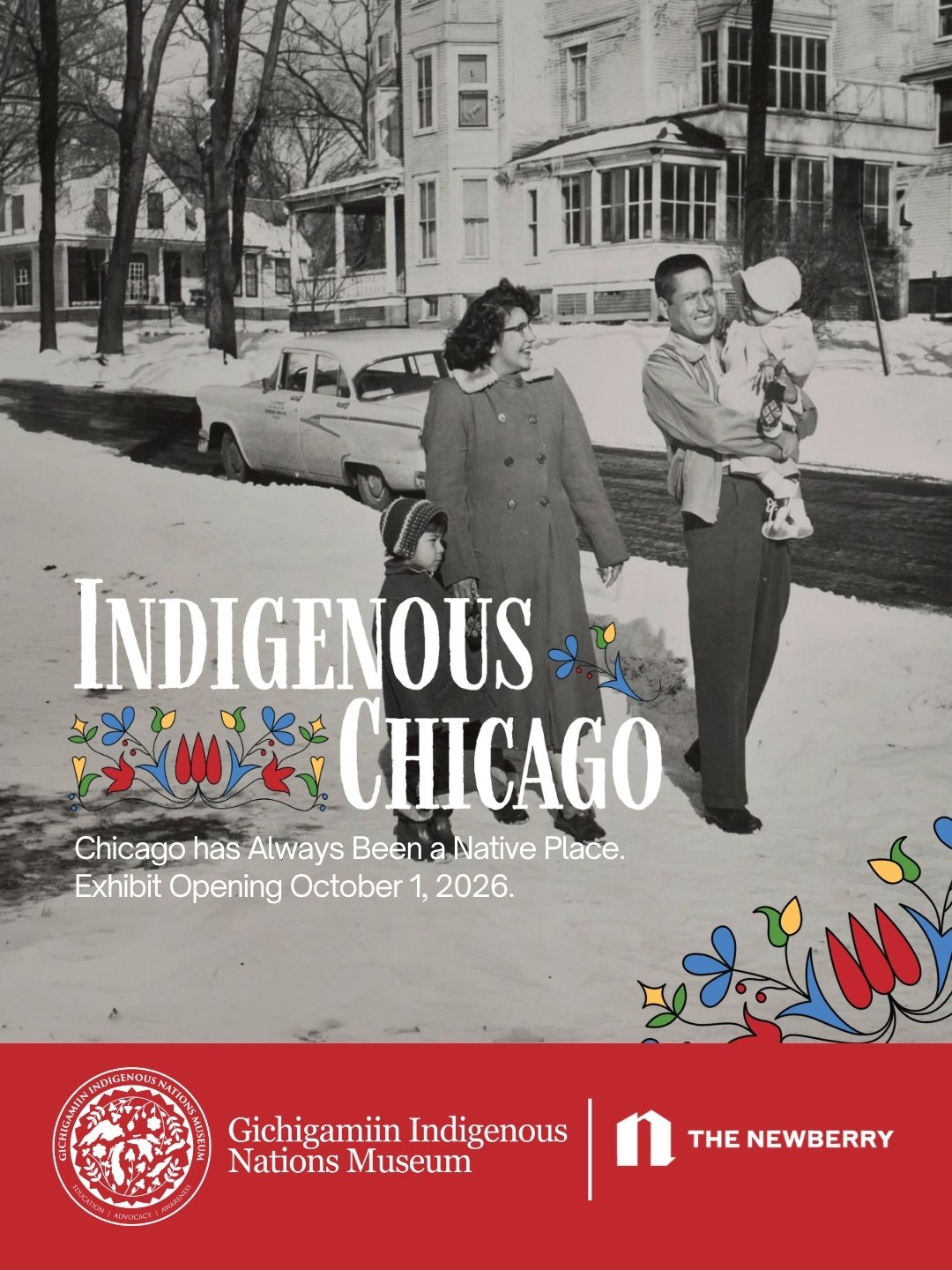
The exhibition was curated by Rose Miron; Analú María López (Huachichil/Xi’úi); Doug Kiel (Oneida); and Dave Spencer (Mississippi Chata/Diné).
Indigenous Chicago is part of a broader Newberry initiative that includes digital maps, educational resources, oral histories, and public programs exploring the Indigenous past, present, and future of Chicago.